Thoughtful textiles.
A collection that feels like home.

A collection that feels like home.
Choose baskets, pouches and organizers around the job they need to do.
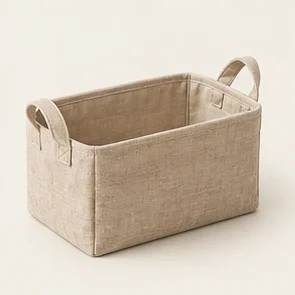
A storage product earns its place by making an everyday task easier. Before choosing a color or trim, decide what the customer needs to put away and where that item naturally ends up.
A shallow tray works for items that need to stay visible. A zip pouch keeps small pieces together. A divided organizer separates a drawer into useful zones. A handled basket is easier to move between a shelf and a work surface. These are different jobs, even when the products share a fabric.
Write down usable internal dimensions as well as the overall size. Consider the space taken by handles, closures or a folded rim. For hanging products, specify the intended support and ask the supplier to confirm an appropriate attachment method and load guidance.
Foldable products should be reviewed both flat and assembled. Check how the base sits, whether dividers stay in position and whether the product keeps its useful shape during ordinary handling. Ask what components provide stiffness so the construction is clear.
Record packed dimensions, units per carton and gross weight after a sample packing trial. A lightweight product can still occupy considerable space. Comparing quotations on an agreed packing basis gives a more useful view of the landed-cost discussion.
A small range organized by use is often easier to explain than a long list of nearly identical boxes. Show the intended task in product photography, then give buyers the dimensions they need to assess fit.